
H. pylori Infection Treatment in Cairo – Symptoms, Diagnosis and Modern Treatment Protocols
H. pylori (Helicobacter pylori) infection is a leading cause of chronic gastritis and peptic ulcers. At Dr. Abdelaziz El.Saadi’s clinic in El Manial, we follow the latest 2026 medical protocols for accurate diagnosis and effective H. pylori treatment, including quadruple therapy for resistant cases. Diagnosis is reliably performed via Urea Breath Test, while gastroscopy (endoscopy) is recommended for alarm symptoms like weight loss or GI bleeding. Strict adherence to the 10–14 day regimen is essential to ensure complete eradication and prevent recurrence. Millions of people may carry the infection without noticeable symptoms, but untreated infection can lead to complications over time.
In this page,
Dr. Abdelaziz Elsaadi – Consultant of Internal Medicine, Gastroenterology, Hepatology and Endoscopy
explains the symptoms, diagnosis and modern treatment protocols for H. pylori infection.
What is H. pylori ?
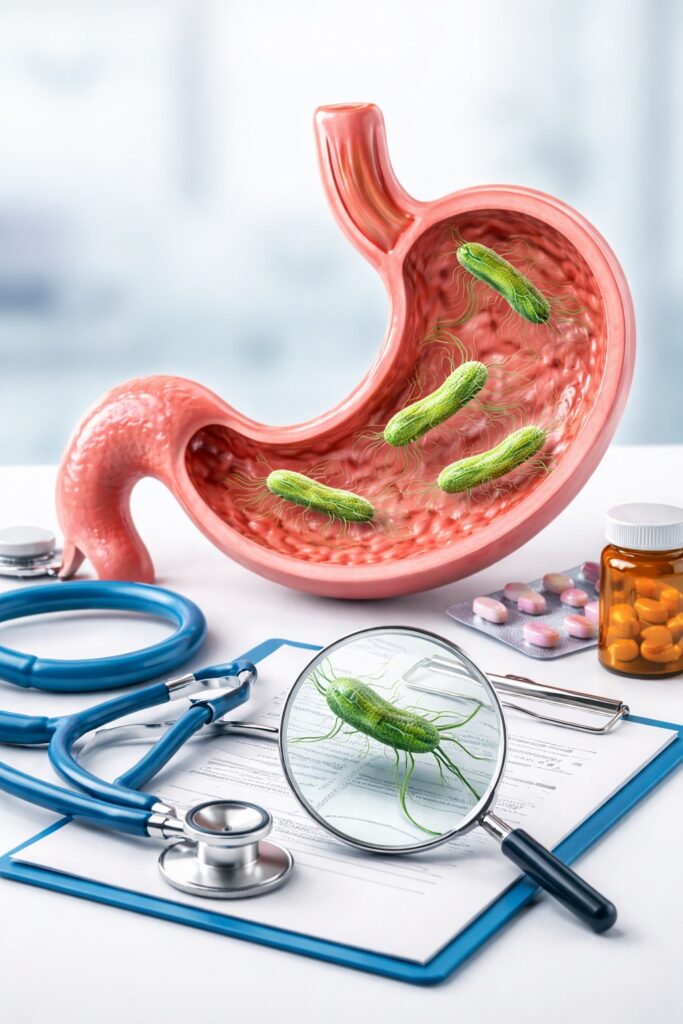
Helicobacter pylori: is a type of bacteria that lives in the stomach lining. It has a unique ability to survive in the acidic environment of the stomach.
This bacterium may cause:
- Chronic gastritis
- Gastric ulcer
- Duodenal ulcer
- Long-term digestive discomfort
In rare cases, long-standing infection may lead to more serious complications if left untreated.
Symptoms of H. pylori Infection:
Many infected individuals have no symptoms. However, when gastritis or ulcers develop, patients may experience:
- Burning pain in the upper abdomen
- Heartburn and acid reflux
- Early fullness after eating small meals
- Loss of appetite
- Nausea or vomiting
- Fatigue and general weakness
- Black or dark stools in cases of gastrointestinal bleeding
⚠️ Not all stomach ulcers are caused by H. pylori. Excessive use of painkillers such as NSAIDs can also lead to ulcers.
How is H. pylori Diagnosed ?
Several tests are available to diagnose the infection.
Stool Antigen Test
One of the most accurate tests for detecting active infection.
Urea Breath Test
Highly accurate and widely used for both diagnosis and follow-up after treatment.
Blood Antibody Test
May indicate past exposure but is less reliable for active infection.
Upper Endoscopy with Biopsy
Performed in selected cases, especially when alarming symptoms are present.
When is Endoscopy Needed ?
Your doctor may recommend endoscopy if you have:
- Severe or persistent stomach pain
- Unexplained weight loss
- Recurrent vomiting
- Gastrointestinal bleeding
- Failure to respond to treatment
⚠️ Endoscopy allows direct visualization of the stomach lining and biopsy if necessary.
Modern Treatment for H. pylori
Treatment typically involves combination therapy using multiple medications to eradicate the bacteria.
Standard treatment usually includes:
- Acid-reducing medications
- Two or more antibiotics
- Treatment duration of 10–14 days
In certain cases, quadruple therapy may be recommended when antibiotic resistance is suspected.
Full adherence to the treatment regimen is essential for successful eradication.
Can H. pylori Be Prevented ?
Although infection is common, some precautions may reduce the risk:
- Wash hands regularly with soap and water
- Drink clean and safe water
- Avoid contaminated food
- Do not share personal utensils
- Maintain proper food hygiene
Diet for Patients with H. pylori
Diet alone cannot cure the infection, but certain foods may help reduce stomach irritation.
Patients are advised to limit:
- Spicy foods
- Fried foods
- Excessive coffee
- Strong acidic foods
Foods that may be easier on the stomach include:
- Broccoli and cabbage
- Yogurt (probiotics)
- Natural honey
- Olive oil
- Easily digestible fruits such as apples or bananas
Can H. pylori Be Completely Cured ?
Yes. In most cases, H. pylori infection can be completely eradicated with the correct treatment.
However, one common mistake is stopping medications early once symptoms improve.
This may lead to:
- Incomplete eradication
- Antibiotic resistance
- More difficult treatment later
Completing the full course of therapy is essential.
For accurate diagnosis and personalized treatment, Book your appointment now