
Gastroscopy (Upper GI Endoscopy) in Cairo | Accurate Diagnosis of Acid Reflux, Stomach Ulcers & Early Stomach Cancer
Find the Cause of Your Symptoms—Without the Guesswork
If you have persistent heartburn, upper abdominal pain, difficulty swallowing, unexplained anemia, or frequent vomiting, a gastroscopy (Upper GI Endoscopy) may be the fastest and most accurate way to identify the underlying cause.
We understand that many patients feel anxious about having an endoscopy. At Dr. Abdelaziz El-Saadi’s Gastroenterology Clinic in El Manial, Cairo, your comfort is just as important as your diagnosis. The procedure is performed using modern high-definition endoscopy equipment and light intravenous sedation, allowing most patients to remain comfortable throughout the examination.
A gastroscopy usually takes 5–10 minutes, requires no overnight hospital stay, and allows you to return home the same day in most cases.
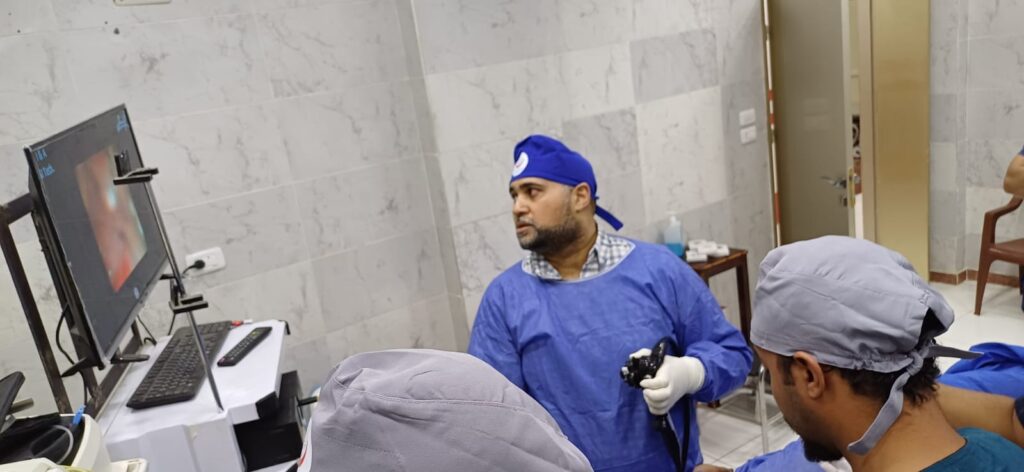
Why Patients Choose Our Clinic
✔ Comfortable light intravenous sedation for most patients
✔ Usually completed within 5–10 minutes
✔ Modern high-definition endoscopy systems
✔ Strict sterilization and infection-control standards
✔ Biopsy sampling and H. pylori testing when medically indicated
✔ Diagnostic and selected therapeutic procedures during the same session when appropriate
Many digestive symptoms improve with medication, but others may signal conditions that require further evaluation.
What is a Gastroscopy?
A gastroscopy, also known as an Upper GI Endoscopy, is a minimally invasive procedure that uses a thin, flexible camera to examine the esophagus, stomach, and the first part of the small intestine (duodenum). The images are displayed in real time on a high-definition monitor, allowing your doctor to detect subtle abnormalities that may not be visible on blood tests or imaging studies.
If necessary, tissue biopsies can be taken painlessly during the procedure for laboratory analysis, including testing for Helicobacter pylori (H. pylori) infection.
When is a Gastroscopy Recommended ?
Your doctor may recommend an upper GI endoscopy if you have:
✅ Persistent heartburn or gastroesophageal reflux (GERD)
✅ Recurrent upper abdominal or stomach pain.
✅ Difficulty or pain when swallowing.
✅ Persistent nausea or repeated vomiting.
✅ Vomiting blood or passing black stools.
✅ Iron-deficiency anemia without a clear cause.
✅ Unexplained weight loss.
✅ Suspected stomach or duodenal ulcers.
✅ Suspected stomach or esophageal cancer.
✅ Evaluation for H. pylori infectionFollow-up of certain digestive conditions when indicated
Diagnostic vs. Therapeutic Endoscopy
A gastroscopy is not only a diagnostic procedure. In many cases, it also allows treatment during the same examination.
| Diagnostic | Therapeutic |
|---|---|
| Examination of the esophagus, stomach, and duodenum | Removal of selected polyps |
| H. pylori testing or Tissue biopsy | Treatment of upper GI bleeding |
| Evaluation of GERD, gastritis, and ulcers | ARMA, EndoBand, Balloon |
How to Prepare for Your Gastroscopy
Preparation instructions may vary depending on your medical condition and medications. Before your procedure, you will receive personalized instructions regarding:
- Fasting before the examination
- Blood-thinning medications
- Diabetes medications
- Other prescription drugs or supplements
Following these instructions carefully helps ensure the safest procedure and the most accurate results.
Frequently Asked Questions
Gastroscopy Questions
Will I feel pain ?
Most patients experience little or no discomfort. Light intravenous sedation helps you remain relaxed throughout the examination.
Does a gastroscopy require general anesthesia?
No. In most cases, the procedure is performed under light sedation rather than general anesthesia.
Can a gastroscopy detect H. pylori?
Yes. When clinically indicated, biopsy samples can be taken during the procedure for accurate testing.
Can a biopsy be taken during the examination?
Yes. Biopsy sampling is painless and is commonly performed when additional laboratory evaluation is needed.
When can I eat after the procedure?
Your doctor will advise you when it is safe to eat and drink, which is usually after the effects of sedation have worn off.
Can I return to work the same day?
Most patients return home the same day. Depending on the sedative used, many can resume normal activities the following day.
Can a gastroscopy detect stomach cancer?
Gastroscopy is the most accurate examination for detecting abnormalities in the stomach and esophagus. If suspicious tissue is found, biopsies can be obtained immediately for laboratory analysis.
Take the First Step Toward the Right Diagnosis
Book your consultation with Dr. Abdelaziz El-Saadi today and take the first step toward better digestive health with expert, compassionate care.