
Gastroscopy (Upper GI Endoscopy) performed by one of Cairo’s leading endoscopy experts
Accurate diagnosis of GERD, gastritis, ulcers, and upper GI bleeding using advanced medical technology.
Safe, painless, and performed according to international medical standards.
A gastroscopy is a simple, safe, and painless procedure that helps accurately diagnose the cause of stomach pain, acid reflux, and swallowing difficulties.
At our unit, the procedure is performed using advanced endoscopic technology under the supervision of Dr. Abdel Aziz El-Saadi, Consultant of Gastroenterology and Endoscopy, ensuring the highest level of safety, comfort, and accuracy.
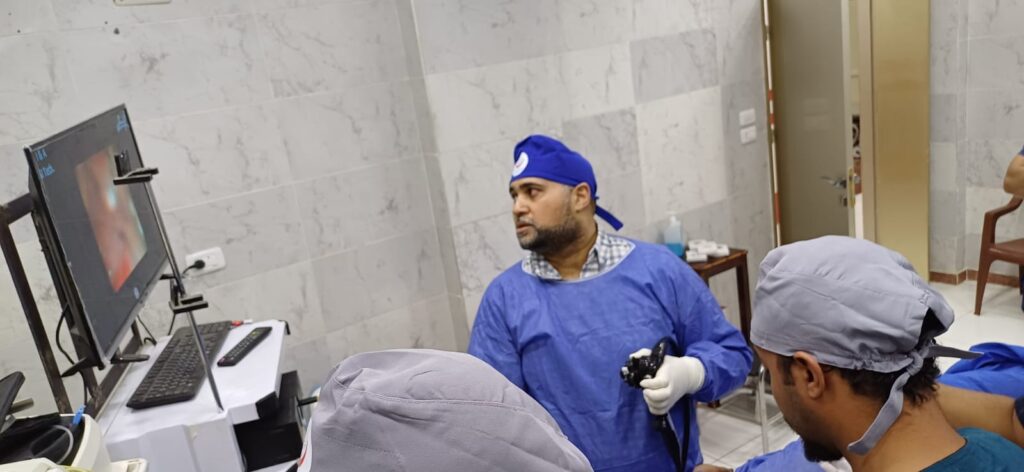
What is a Gastroscopy?
A Gastroscopy is a safe diagnostic or therapeutic medical procedure. It involves the use of a thin, flexible tube equipped with a high-precision camera. It is considered the “Gold Standard” for diagnosing stomach pain, chronic acidity, and swallowing difficulties.
When is a Gastroscopy Recommended ?
- Digestive Disorders: Chronic acid reflux (GERD) and persistent indigestion.
- Unexplained Pain: Upper abdominal pain and unexplained weight loss.
- Swallowing Difficulties: Dysphagia (difficulty swallowing), odynophagia (painful swallowing), or recurrent vomiting.
- Bleeding or Anemia: Melena (black stools), hematemesis (vomiting blood), or iron-deficiency anemia of unknown origin.
- Specialized Screenings: Diagnosing Celiac disease or Crohn’s disease.
Diagnostic vs. Therapeutic Endoscopy
| Diagnostic | Therapeutic |
|---|---|
| Taking biopsies for tissue analysis. | Weight Loss: Gastric Balloon or Botox injections. |
| Accurate detection of Helicobacter pylori (H. pylori) | Non-Surgical: Endoscopic Sleeve Gastroplasty. |
| Determining the grade of GERD (Acid reflux). | Polypectomy (Removal of polyps). |
| Investigating causes of chronic pain and anemia. | Ligation or injection of esophageal varices to stop bleeding. |
How to Prepare for Your Gastroscopy
Fasting: Refrain from eating for 8-10 hours and drinking for 6 hours prior to the procedure.
Patients can usually return home the same day and resume normal activities shortly after the procedure.
Medications: Please inform us of all medications you are taking, especially blood thinners (anticoagulants), to determine the necessary temporary cessation protocol.
FAQ
Will I feel pain ?
The procedure is entirely painless and performed under light sedation. You may only feel a temporary sensation of fullness or bloating.
How long does it take ?
In most cases, the examination takes only 5 to 10 minutes.
Is it safe ?
Yes, it is classified as one of the safest medical procedures in gastroenterology.
Can it detect tumors ?
Absolutely. It is the most accurate tool worldwide for the early detection of gastric and esophageal tumors.
Don’t leave your symptoms to chance